
The short version
Moss grows where the roof stays shaded and damp, like north-facing slopes and spots under trees. Check from the ground, never pressure wash asphalt shingles, and stay off a wet roof. Removal and treatment help, but moss can come back, so plan on keeping an eye on it.
Why moss stands out this time of year.
The Okanagan is dry for most of the year, so moss can seem out of place here. But late fall and winter bring many more grey, damp days than summer does. Light rain, wet snow, frost and fog keep the roof wet, and short days give the sun less time to dry it.
Moss loves that. It soaks up the moisture and turns a brighter green, so patches that looked brown and dry in August suddenly catch your eye in November. A lot of homeowners notice it for the first time while they are hanging Christmas lights or watching the leaves come down.
Where moss grows on an Okanagan roof.
Moss needs shade and moisture more than anything else. On most homes it starts in the same few places:
- North-facing roof slopes, which get the least direct sun and stay damp the longest.
- Under big trees, where shade keeps the roof cool and wet.
- Spots where pine needles and leaves pile up, since that debris holds water against the shingles.
- Valleys, where two roof slopes meet and debris collects.
- Lower roofs that sit in the shadow of a taller part of the house.
Why it is worth dealing with.
A little moss is not an emergency. Left alone for years, though, it can grow thicker, hold water against the roof and work its way under the edges of the shingles. That is where roofers start to worry about lifted shingles and leaks.
Moss also sheds. Bits of it wash down into the gutters with the rain and mix with leaves and needles. That can slow the water on its way to the downspouts and add to the mess in the gutter.
If you already have a leak, a soft spot or damaged shingles, call a roofer. Moss removal is cleaning work. It does not fix roof damage.
What to check from the ground.
You can learn a lot without a ladder. Walk around the house on a dry day and look up. Take a few photos with your phone so you can point out the spots later.
- Green or dark patches, and which side of the house they are on.
- Thick clumps, especially along shingle edges and in the valleys.
- Moss or green bits sitting in the gutters or at the downspout outlets.
- Branches hanging over the roof or touching it.
- Anything that looks lifted, cracked or missing.
Keep the pressure washer off the shingles.
It is tempting to blast moss off with a pressure washer. Please don’t. High pressure can strip the protective granules off asphalt shingles and shorten the life of the roof. We never pressure wash asphalt shingles.
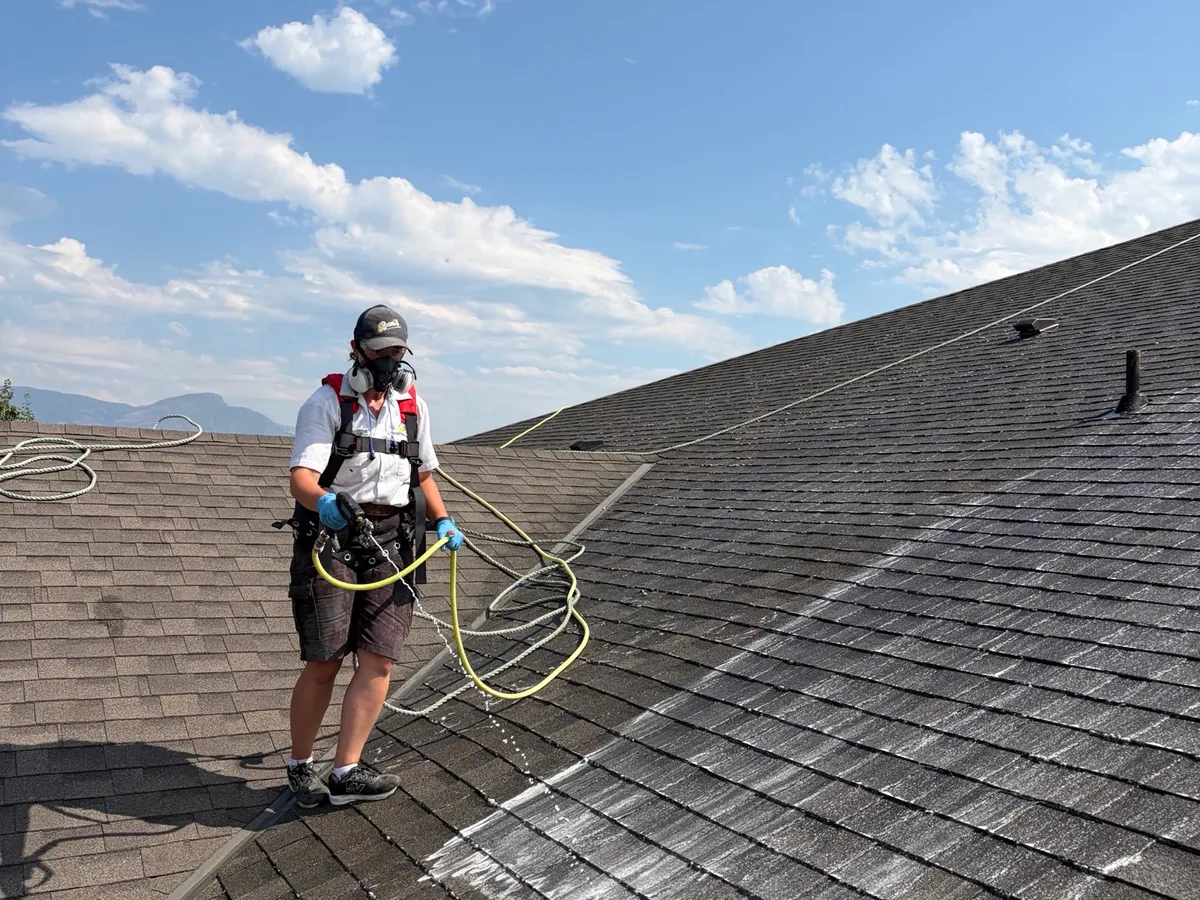
Our approach is gentle. We scrape the moss off by hand and then apply a treatment to discourage new growth. Treatment works on the moss that is left over time, so the roof may not look perfect the same day.
Please don’t climb up yourself, either. Moss is slippery when it is wet, and a damp north slope can stay slick for most of a fall day. A roof with frost, ice or snow on it is not a safe place to work for anyone.
Before you book, read what to ask about roof moss removal.
Is late fall a good time to treat it?
It can be, but the weather decides. Moss work needs a roof that is safe to walk on, and treatments do their job best with some dry time after they go on. In late fall that means watching the forecast and picking a dry stretch.
If the snow arrives first, that is fine. Moss grows slowly. Note where the patches are now, while they are easy to see, and plan the work for the next good window of dry weather. Discuss the timing at the assessment, since every roof and every patch is different.
Will it come back?
Moss can come back. Removal deals with what is there now, and treatment helps slow new growth, but the shade and moisture that let it grow do not go away. Trimming branches that hang over the roof lets in more sun and cuts down on the debris that holds water.
Keeping the gutters clear helps too. Clean gutters let water drain off the roof edge instead of sitting there. Many homeowners book their gutter cleaning in the same visit as the moss work, so the moss and debris that wash down are cleared out together.
See why to clean gutters before the first snow for the rest of the pre-winter list.
Get a moss assessment from Beam’s.
Beam’s removes roof moss in Kelowna, West Kelowna and the nearby Okanagan. We look at the roof material, the access and how much moss there is before we recommend the work. Gutter cleaning starts at $225, and you can ask for it in the same request.
Send us your ground photos and tell us which side of the house the moss is on. Request a free quote online, or call or text 778-583-5057.
Common questions
Why does my roof have more moss in the fall?
It is usually not new. Cool, damp, short days keep the roof wet, and the moss soaks it up and turns bright green, so it is easier to see.
Can I pressure wash moss off my roof?
No. Pressure washing can strip the granules off asphalt shingles. We scrape moss off by hand and apply a treatment instead.
Can you remove moss in winter?
Only when the roof is dry and safe to walk on. Frost, ice and snow put the work on hold until the weather allows.
Will the moss come back after treatment?
It can. Treatment helps slow regrowth, but shade and moisture stay. Trimming overhanging branches and keeping gutters clear helps.
Does moss removal include gutter cleaning?
Not automatically. Ask for gutter cleaning in the same request and the quote will list each job.
Ready to plan your clean?
See what the service includes, or request a free quote for your property.
Explore roof moss removalGet a Free Quote