
The short version
Some grit in the gutters is normal wear. More every year, or bare spots on the shingles, means it is time for a roofer’s opinion. Clear the grit and leaves out before winter so the gutters can drain, and never pressure wash shingles.
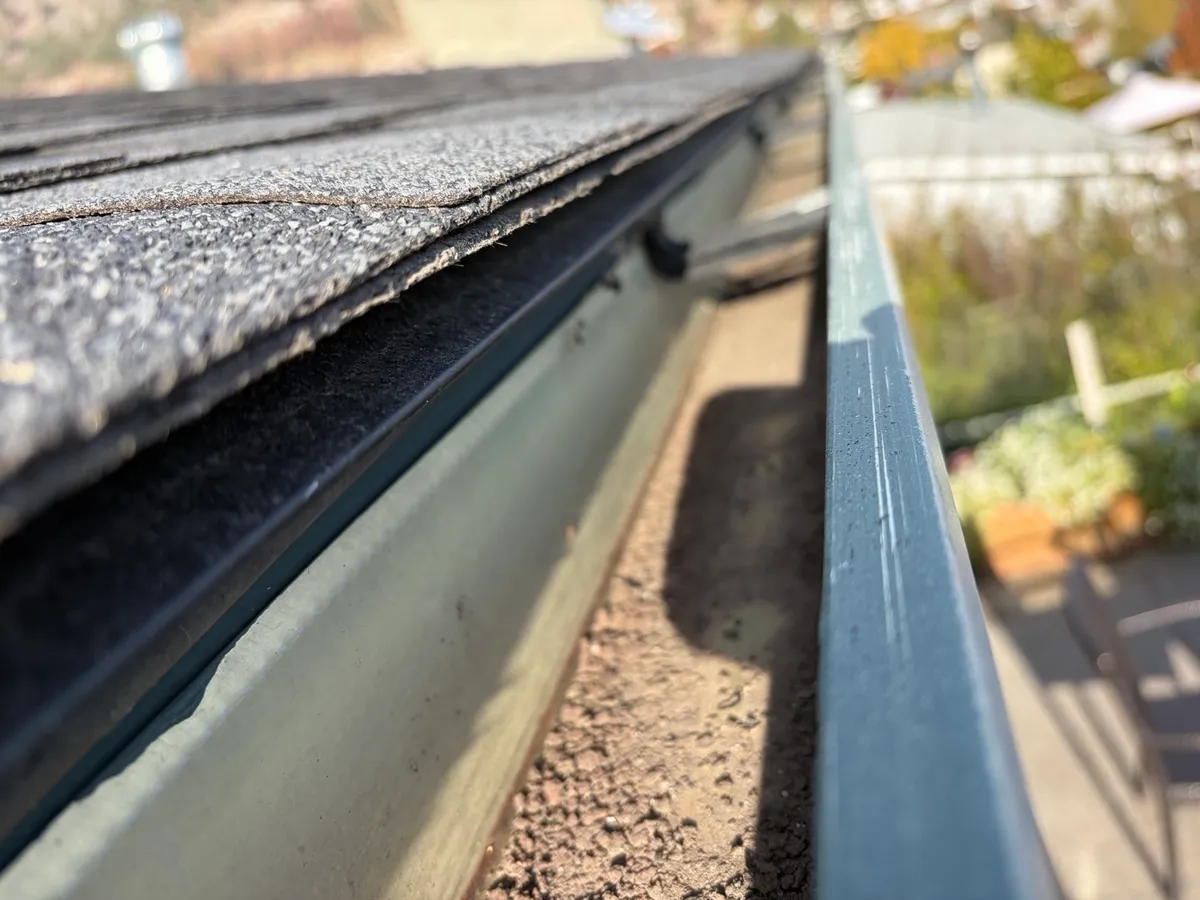
What that grit actually is.
Asphalt shingles are covered in small mineral granules pressed into the top layer. They give the roof its colour and protect the asphalt underneath from the sun.
Rain slowly washes some of those granules off the roof and into the gutters. That is why a gutter can look like it has a strip of coarse sand along the bottom, like the one in the photo above. It is the most common thing we find in gutters after leaves and pine needles.
When it is normal.
Every asphalt roof sheds some granules over its life. Sun, heat, cold and rain all wear on the surface, and the loose pieces end up in the lowest place they can reach: the gutter.
A newer roof can shed a fair bit in its first while, too. Shingles come with some extra loose granules from the factory, and those wash off early. Seeing grit in the gutters of a fairly new roof is not, on its own, a sign that something is wrong.
When to get the roof looked at.
Grit in the gutters does not tell you much on its own. What matters is the trend, and what the shingles look like. These are signs it is worth calling a roofer for an opinion:
- The layer in the gutters is clearly thicker every time they get cleaned.
- You can see dark, bare or smooth patches on the shingles from the ground.
- Shingle colour looks blotchy or uneven compared to a few years ago.
- Granules pile up below one spot, like under a branch that rubs the roof.
- You find a lot of grit after a hailstorm.
Why fall makes it worse.
Grit on its own is heavy but it moves. The trouble starts when it mixes with the leaves and needles that come down in the fall. The fall rains soak the leaves, they go flat, and the grit settles in between the layers. What you end up with is a dense, wet sludge that sits in the gutter and slows the water down.
A gutter full of sludge holds water against the joints and adds weight on the brackets. It also slows the flow into the downspout, so more water can spill over the front edge. Once the nights drop below freezing, that standing water can freeze in place right when you need the gutters to drain.
For the rest of the pre-winter list, see our post on gutters before the first snow.
What not to do about it.
It can be tempting to blast the roof or gutters clean with a pressure washer. Please don’t aim one at asphalt shingles. High pressure can strip off the same granules that protect the roof, which makes the problem you are worried about worse.
The same goes for scraping or brushing hard at the shingles to get moss or dirt off. If the roof needs attention, it should be treated gently. Moss can be treated without high pressure, though it can come back over time, especially on shaded parts of the roof.
If moss is part of the picture, our guide to roof moss removal covers what to ask before booking.
What a clean does with the grit.
Our gutter clean removes the leaves, needles and roof debris from inside the gutters, grit included, flushes the downspouts and hauls the debris away. We send photos of the cleaned gutters when we are done, so you can see what came out.
We are not roofers, so we will not tell you your roof needs replacing. If we notice a heavy layer of grit, bare patches or a damaged spot while we are up there, we will tell you what we saw and suggest you have a roofer look at it.
Clear it out before winter.
If your gutters have not been cleaned since the leaves came down, now is a good time, before the snow and freezing nights settle in. Gutter cleaning starts at $225. Tell us about any overflowing sections or gutter guards when you ask for a quote so we can price it properly.
Book a free quote online, or call us at 778-583-5057.
Common questions
Is it bad to have shingle grit in my gutters?
Not by itself. All asphalt roofs shed some granules, and new roofs often shed extra early on. A layer that grows every year, or bare spots on the shingles, is worth a roofer’s look.
Will grit clog my downspouts?
It can add to the problem. Grit settles in with wet leaves and forms a heavy sludge that slows water down at the downspout. Clearing the gutters and flushing the downspouts deals with it.
Can I pressure wash my roof to clean it?
No. Pressure washing asphalt shingles can strip the protective granules. Moss and dirt on a roof should be treated gently instead.
Do you remove the grit when you clean gutters?
Yes. We take out the leaves, needles and roof debris, including the grit, flush the downspouts and haul it all away.
Ready to plan your clean?
See what the service includes, or request a free quote for your property.
Explore gutter cleaningGet a Free Quote